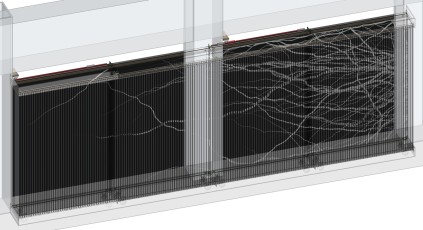
Project: Liberec 2011
/ Museum of The Slav Epic in Moravsky Krumlov
Mucha donated this reminder of important moments of the Czech nation to Prague so that absolutely everyone could experience them as if in an atmospheric textbook.
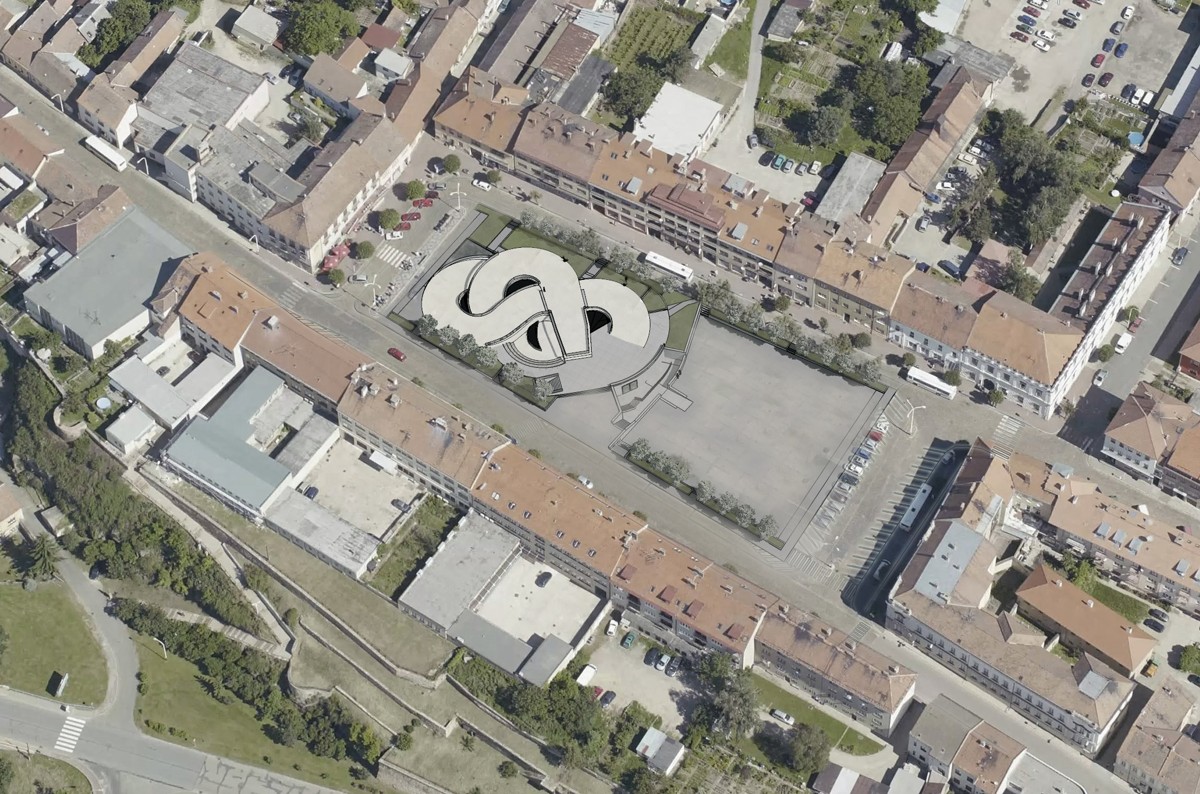
The building presents itself as landscaped parkland, rising above street level by no more than two 40cm-high steps.


History of the site
Anyone who has spent even half an hour in Krumlov would not want to deny it such a chance of rescue.
The knightly town (founded in 1260) was awaiting liberation at the end of the Second World War when the Red Army's advance halted in nearby Ivančice. The cause was fear that German tanks retreating through the town would make a stand there, and so 2 days before the end of the war the showpiece town was bombed from the air, and only 2 houses were left standing on the square.


Layout solution
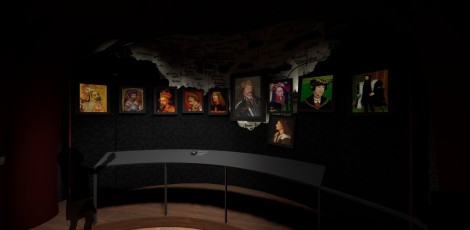
Alfons Mucha recapitulates the themes of the canvases in the last of them, The Apotheosis of the Slavs. The narrative line runs up from the blue ancestral homeland at the bottom, through the rulers of united Slavic groupings to Bohemia, pushes off along an arc of wars and descends in a whirlwind to the last great interventions of the human spirit, down to the woman in the foreground, who gazes upon this inspiration through the Slavic god.
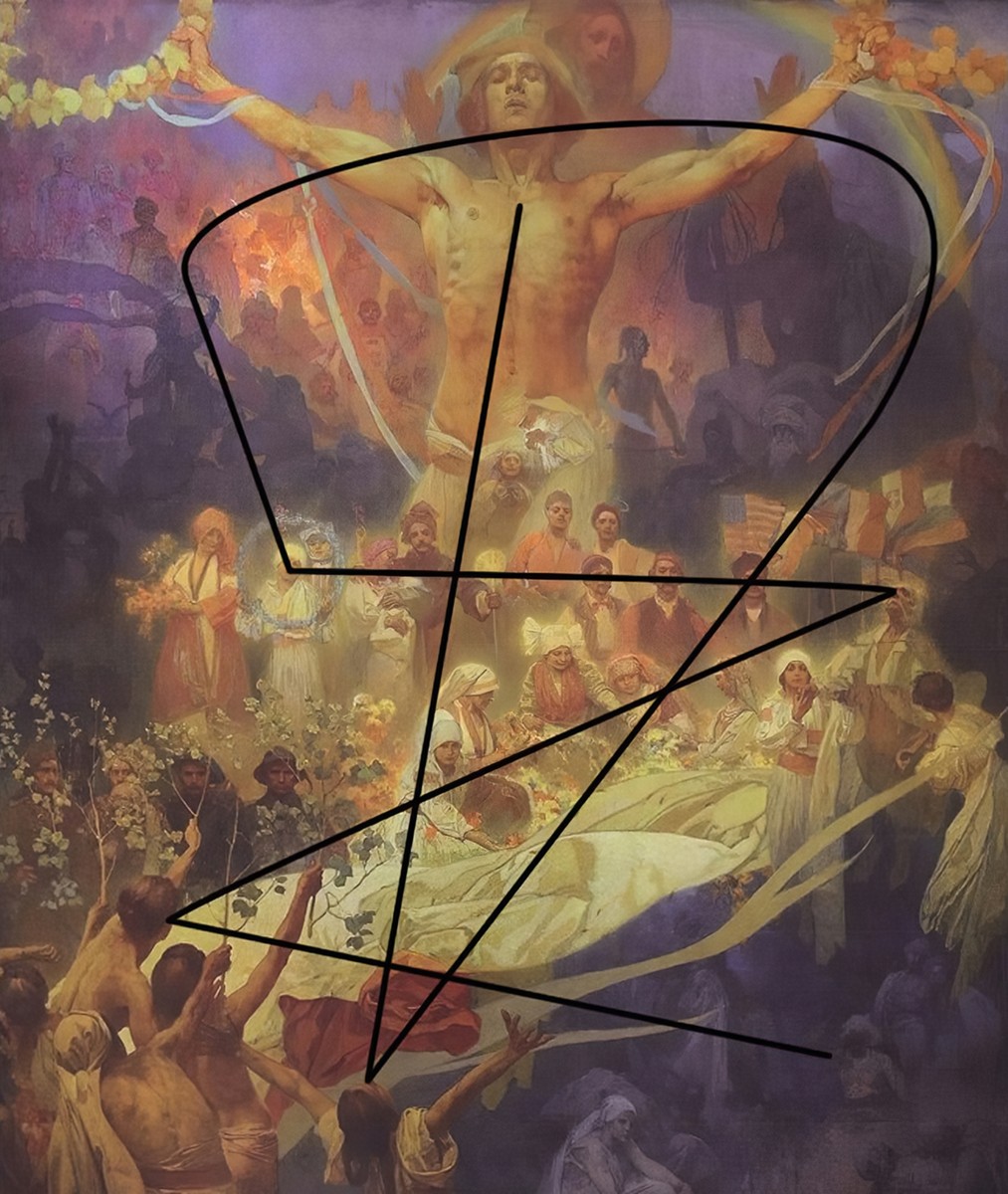
When composing the floor plan, it was necessary to find modular elements for the parts of the gallery, shift them relative to one another according to the order and grouping of the paintings, and thereby achieve a suitable building plan in relation to the area of the surrounding existing development, with a minimal footprint for the exhibition and as much space as possible for the viewer.


A suitable arrangement proved to be two pairs of interpenetrating cylinders whose centres form a trapezium with an acute angle of 60 degrees, with an inner radius of 4 metres and an 8-metre “corridor”.


The 1.2-metre difference in height between the types of paintings, and hence of the ceilings, was overcome on a 120° segment of a helicoidal ramp.
The chronological placement of the events in the paintings then determines how the ceiling height changes.


Concept / Interpreting the message
..I wanted to find what the legacy of our forefathers might look like today... I found nothing but a symbol in contradiction.
In the history of religion, the snake has inspired more mysteries and cults than any other animal. The shedding of its skin evoked, in the mind of archaic man, the renewal of life energy. (…) The snake therefore held an important place in the mythologies and cults of all tribal and ancient peoples. The myths associated with the snake were many-sided: they expressed immortality (endless life), death, rebirth, sacred knowledge [=wisdom, note M.] and the afterlife. (…) Even the ancient Romans believed that the snake was one of the sacred animals in which divine power was embodied.
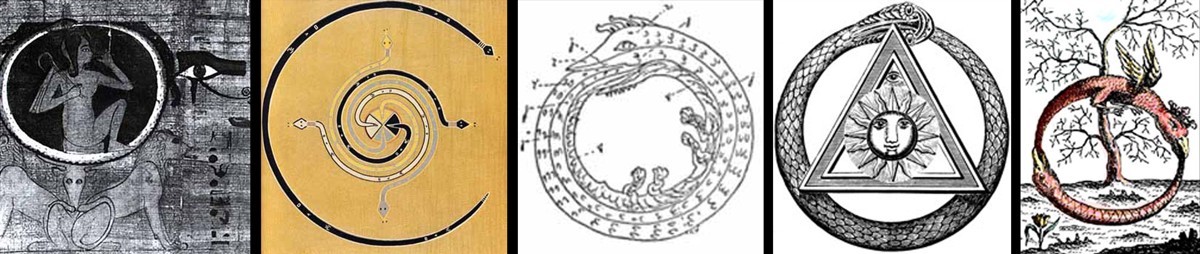
Testimony of Mat. Poličanský, 1613 : (…) Others again transgress the first commandment in that they regard every kind of living creature, as was said before, as their little gods and helpers to their fortune; and although such superstition was found among the heathens, yet among us Christians, too, many such errors and superstitions are found, and especially among the Muscovites, Lithuanians, Prussians and Ruthenians, yes, even among us in this Czech land, and most of all among the common folk: they hold it to be true that when, early in spring, a man first catches sight of a living snake
crawling along the ground, he will not fall ill that year and will have good health and other fortune… And others, catching sight of one in the yard, and especially when it is large, call it the lucky old master of the house.”
The serpent deity and Baba Yaga
In Slavic tradition the snake is a very important being, and its depiction has several meanings. In Slavic spirituality the snake appears as the so-called domovník (domovik in the old language), the embodiment of the protector of the household. Our ancestors, in an Indo-European context, perceived the snake as a sign of wisdom. This is also the origin of the words hadač and hadačka in the sense of sorcerers and sorceresses, that is, Slavic sages. A seer could foretell the future, but far more often the future was
guessed.
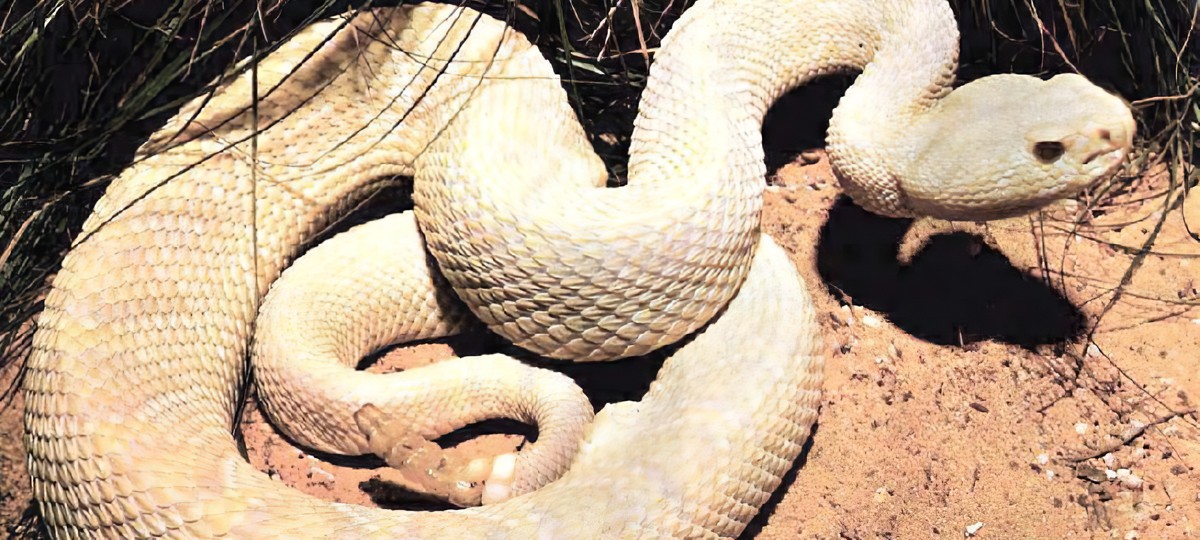
The arrival of the Church, rooted in a foreign tradition, completely reversed the image of the snake and its meaning. It identified the snake, a sign of “pagan” wisdom, with evil (Saint George slaying the serpent), just as it identified Perun with the “devil” and the deity Veles with a demon. Whereas killing a snake had once been unthinkable, the churchmen's crusade against snakes throughout Europe caused the extinction of many species.
The embodiment of Slavic wisdom had to be vilified, which is why she is shrouded in a host of debased folk distortions. She lives in a hut on chicken legs, that is, in the dwelling or storehouse of the wild hunter-gatherer peoples inhabiting the marshy regions of Siberia and Karelia. Her house is fenced with human skeletons, she flies in a mortar, sweeps away her tracks with a broom and devours small children and human souls (the best-known tale being Vasilisa the Beautiful).
Mars Ultor
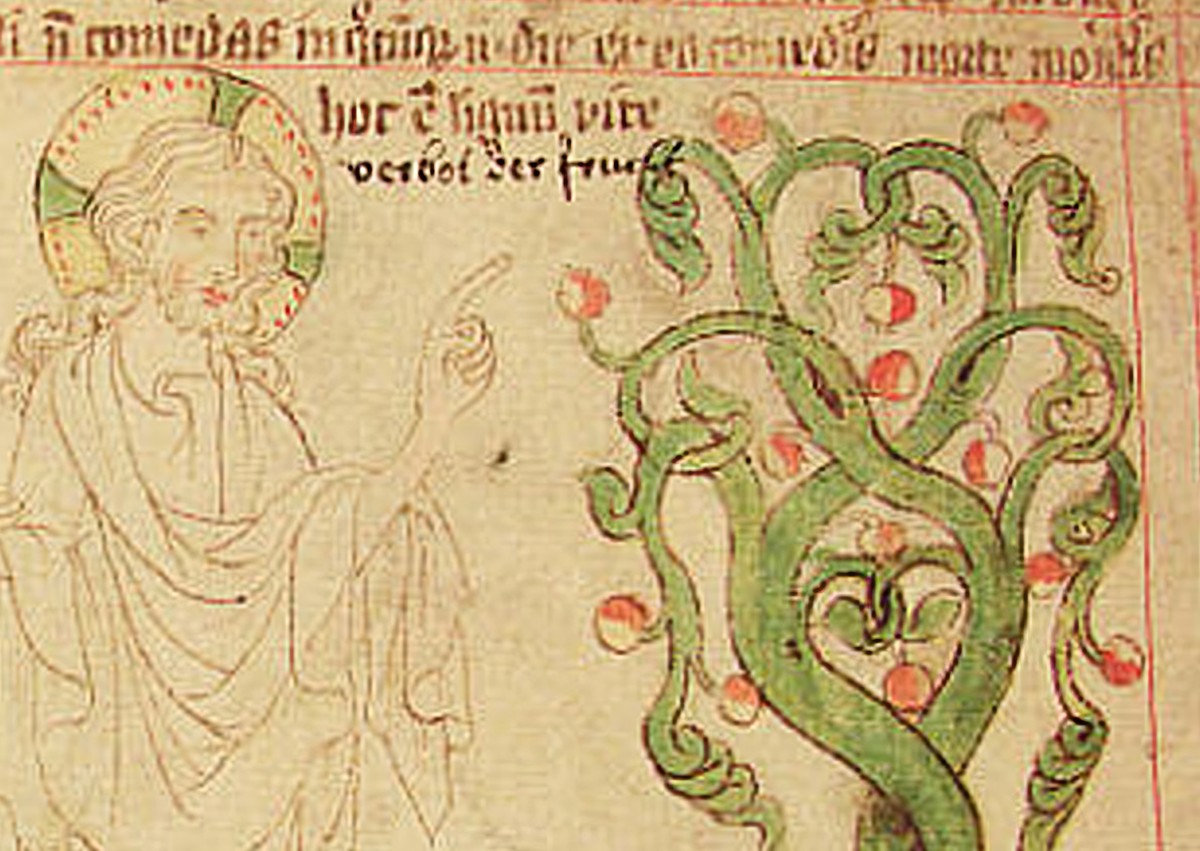
And the Lord God planted a garden eastward in Eden; and there he put the man whom he had formed. And out of the ground made the Lord God to grow every tree that is pleasant to the sight, and good for food; the tree of life also in the midst of the garden, and the tree of knowledge of good and evil.
Genesis 2, 9.
The snake, as the incarnation of Satan, whispered to the couple that the apple was not poisonous and would lend them the eye of God. When God met them again, they were not walking naked through the garden as usual, but hiding their private parts in the bushes. From the paradise garden of ignorance they were expelled into a world of opposites.